ISBN numbers for self-published books: cost, free ISBNs, ownership
A single ISBN costs $125 from Bowker in the US, nothing in Canada, and nothing when a platform or publisher assigns it. What you pay for, or give up, is whose name sits in the record.
An ISBN number is the 13-digit code that lets bookstores, wholesalers and libraries find, order and track one specific version of a book. For a self-published author it raises three practical questions: do you need one, what does it cost, and who owns it. The last question matters most, because the ISBN does not just identify the book. It identifies the publisher of that edition.
This guide covers what an ISBN is, what buying one costs in the US, the UK and other countries as of October 2026, what you trade away with a free ISBN, and how ISBNs work when a publisher assigns them, including at ShelfPublisher.
What is an ISBN number?
An ISBN (International Standard Book Number) is a unique identifier for one product form or edition of a book, defined by the international standard ISO 2108. It identifies the title, the edition, the format and the publisher that registered it.
ISBNs had 10 digits until the end of 2006. Since 1 January 2007 they always have 13. According to the International ISBN Agency, each ISBN has five parts:
- Prefix – currently 978 or 979.
- Registration group – a country, region or language area. For example, 0 and 1 stand for the English-language area, 3 for the German-language area.
- Registrant – the publisher or imprint.
- Publication – the specific edition and format.
- Check digit – a final digit that validates the rest.
The trade uses the ISBN for ordering, listing, sales records and stock control. It is a product number, not a legal right. Bowker, the US agency, states plainly that the ISBN "conveys no legal or copyright protection". Your copyright exists whether your book has an ISBN or not.
Do I need an ISBN for my book?
For a printed book that bookstores, online retailers and libraries should be able to order, yes. For an ebook sold only through Kindle, no: KDP treats the ISBN as optional only for ebooks and low-content books.
The reason is practical. Wholesale catalogs, retailer systems and library suppliers are organized by ISBN. A book without one cannot be ordered through those systems. On KDP, paperbacks and hardcovers need an ISBN, and each format needs its own. If you only sell copies yourself at readings, events or through your own website, you can skip it, but then nobody can order the book through the trade.
How much does an ISBN cost?
The price depends on the country you publish from, because you buy from the agency where you, as publisher, are located. As of October 2026, one ISBN costs $125 from Bowker in the US and £93 from Nielsen in the UK, and eligible publishers in Canada get them free. Buying in blocks lowers the price per number sharply.
| Country | Official agency | 1 ISBN | 10 ISBNs | 100 ISBNs | 1,000 ISBNs |
|---|---|---|---|---|---|
| United States | Bowker (Myidentifiers) | $125 | $295 | $575 | $1,500 |
| United Kingdom | Nielsen | £93 | £174 | £387 | £994 |
| Germany | MVB (ISBN-Agentur) | €70 + VAT | €225 + VAT | €300 + VAT | €400 + VAT |
| Canada | Library and Archives Canada | free | free | free | free |
Prices as published by each agency, as of October 2026. UK prices include UK VAT. Canada: only for eligible publishers; self-publishers must be located in Canada.
The block price is what makes the single ISBN expensive. At Bowker, 10 ISBNs cost $29.50 each, compared with $125 for one. Bowker itself points out that most books need two to three ISBNs to cover their formats, so an author planning a paperback, an ebook and maybe a hardcover usually ends up buying the 10-pack.
Barcodes are a separate item. Bowker sells one ISBN with one barcode for $150. KDP adds a barcode to a paperback cover at no charge if your print-ready file does not include one. For the full picture of what self-publishing costs beyond the ISBN, see how much it costs to self-publish a book.
How to get an ISBN, step by step
You get an ISBN from the official ISBN agency of the country where you as publisher are located, assign it to one format of one title, and register the book's details with it. Bowker is the official agency only for publishers physically located in the United States and its territories.
- Count your formats. Paperback, hardcover, EPUB and audiobook are separate products. Plan for future revised editions too; ISBNs never expire.
- Find your agency. The International ISBN Agency lists the national agency for each country. In the US that is Bowker, in the UK Nielsen.
- Open an account and buy. At Bowker you set up a Myidentifiers account first; purchased ISBNs appear in the account right away.
- Assign the ISBN to the title and enter the metadata: title, author, format, publisher or imprint name, publication date.
- Use the same imprint everywhere. KDP requires that the imprint you enter matches what is on file with the ISBN agency.
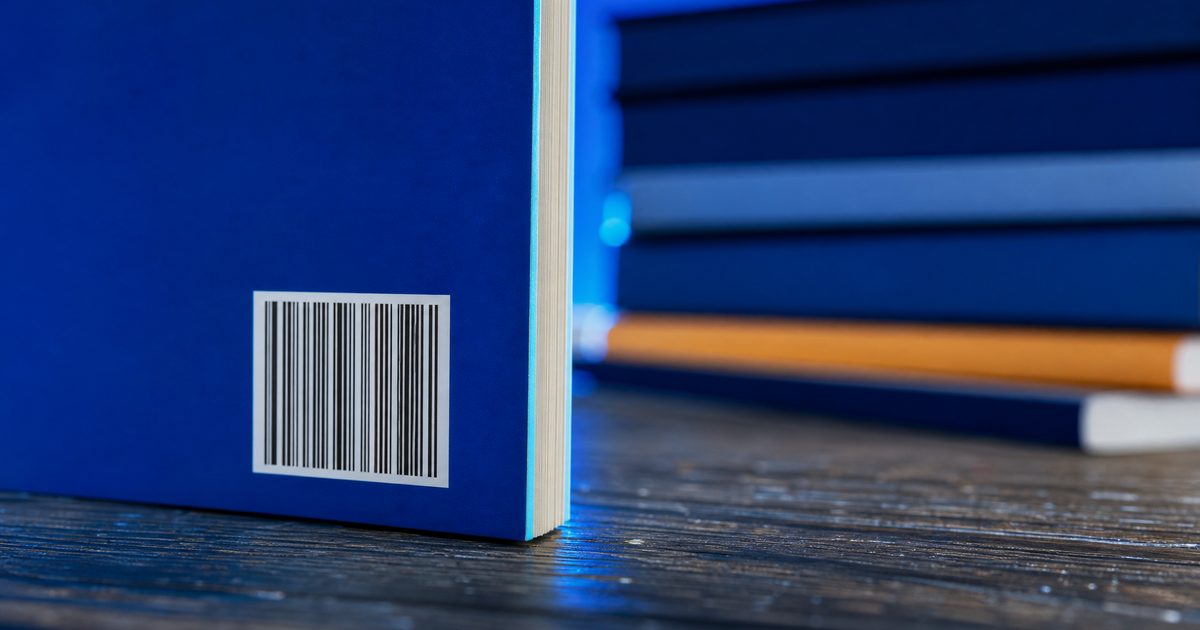
- Add the barcode to the back cover, or let your print service add it.
Buy from the official agency, not from a reseller. Bowker warns that an ISBN obtained from another source "might not identify the publisher of the title accurately". The ISBN Users' Manual adds that publishers may not resell, re-assign or transfer ISBNs to other publishers.
Free ISBNs from KDP and other platforms: what is the catch?
A free ISBN costs nothing, but it names someone else as publisher and only works on the platform that issued it. KDP's free ISBN lists the imprint as "Independently published" and can only be used on KDP. Other platforms that hand out free ISBNs register them under their own imprint, with similar limits.
As of October 2026, KDP's help pages say: "Free ISBNs from us can only be used on KDP. They cannot be used to publish outside of KDP." With any free platform ISBN, your own imprint is not associated with the book, and switching to your own ISBN later means a new edition with a new number.
That is not a trick, it is how the system works. A free ISBN comes from the platform's own block, so the platform is the registrant. The consequences are worth knowing before you start:
- The publisher field is not your name. Anyone checking the record, such as a bookseller, a library or a reviewer, sees the platform imprint.
- The edition is tied to that platform. If you move the book elsewhere, it becomes a new product with a new ISBN.
- For one channel it is perfectly fine. If you only plan to sell on Amazon, the free KDP ISBN saves you $125 or more.
Canada is a special case: there the free ISBN comes from the national agency and is registered to you.
Who owns the ISBN, the publisher or the author?
The ISBN belongs to whoever registered it as publisher: you, if you bought it from your national agency, otherwise the platform or the publishing house that assigned it. The author does not own an ISBN by writing the book.
Under the ISBN standard, the registrant part of every ISBN points to the publisher that registered it, and the metadata attached to it names that publisher. That is why an ISBN cannot move between publishers: when the publisher changes, the new publisher must assign one of its own ISBNs.
This rule comes straight from the International ISBN Agency's assignment guidelines: "If there is a change of publisher, then the new publisher must assign one of their own ISBNs." It explains why the question "who owns my ISBN" has a simple answer. The ISBN belongs to whoever registered it, whether that is you, a platform or a publishing house.
It also explains why the publisher name in the record matters to the trade. Wholesalers, booksellers and library suppliers see the publisher listed with each ISBN. If you want to understand what an imprint is and how it shows up in that record, read what a publishing imprint is.
Does an ISBN copyright your book?
No. An ISBN identifies one edition and its publisher so the trade can order and catalog it; it says nothing about who holds the copyright. In the US and in the EU, copyright protection exists from the moment the work is created. In the US you can additionally register the work with the U.S. Copyright Office, which is optional and separate from the ISBN.
One ISBN per format: paperback, hardcover, ebook, audiobook
Every format and every edition needs its own ISBN. A paperback, a hardcover and an EPUB of the same book are three products with three numbers; a reprint without changes keeps its ISBN, while a new title or a substantial revision gets a new one.
The International ISBN Agency lists the cases:
- New ISBN: each format (hardback, paperback), each digital format (for example PDF and EPUB), each language edition, a substantial text revision, a change of title, a change of publisher.
- Same ISBN: a price change, an unchanged reprint by the same publisher.
So the realistic count for a self-published book in three formats is three ISBNs, plus one more for each later revised edition.
Does your own ISBN get your book into bookstores?
No, not by itself. An ISBN makes a book identifiable and orderable, but someone still has to sell it to the trade. With your own ISBN, your name stands as publisher in the record, yet there is no publishing house behind the book, and single authors and self-publishing platforms do not get wholesale contracts: those take a publishing list with many titles and trade relationships. So stores mostly order a self-published title only once a reader asks for it.
A publisher sells your book to the trade, not just to readers. The trade, Amazon included, orders from the wholesalers itself and reorders; Amazon can take new titles into stock on a trial basis. Bookstores and wholesalers see stock and demand in their ordering systems, and one order can lead to the next, so sales can come even without your own marketing.
How ISBNs work at ShelfPublisher
At ShelfPublisher you do not buy an ISBN. Every book published through a slot gets an ISBN from the block registered to Orbita Media GmbH, with the publisher prefixes 978-3-69104 and 978-3-69296, at no extra cost, and Orbita Media appears as publisher in the record.
The 978-3 at the start is the German-language registration group, because Orbita Media is registered as a publisher in Germany. It shows where the publisher registered its ISBNs; English-language books published by Orbita Media carry it as well.
What comes with it, under our terms (the full process is on how it works):
- No ISBN to buy and no metadata to file. We report the title to the bibliographic directories of the chosen markets under our publisher name.
- Your rights stay yours. Copyright stays with you, and when the contract ends all rights revert to you automatically. While the book is published with us, it is distributed outside Amazon only through us; your own KDP edition may stay, without Expanded Distribution.
- The ISBN stays with Orbita Media. That is the same rule as above: the ISBN identifies the publisher of the edition, and it is used only for our edition.
- After the contract ends, a new edition needs a new ISBN. If you later publish the book yourself or with another house, it gets your own ISBN or the new publisher's ISBN.
The last point is not specific to us. It applies to every ISBN a publisher or platform assigns, including the free ones from KDP and other platforms. The difference is who stands in the record: with a free platform ISBN, a platform; with ShelfPublisher, an international publishing house with more than 1,000 titles and 2 million books sold.
Your paperback and your e-book are published by Orbita Media, and the publisher sells your paperback to the wholesale trade, which more than 50,000 bookstores order from in Germany, Austria, Switzerland, the US, the UK, Canada and many more countries, Amazon included. There is no personal seller account to lose, and no reviews or ad budget are needed to be orderable. A slot costs €35 for one book, down to €20 per book in the largest package: one price per book, no printing costs, no stock. Your share is 30% of net revenue, and you see your sales every day in the portal; net revenue means what Orbita Media receives from the trade after the retailer's discount, the manufacturing cost of the copy and returns. Details are on the pricing page and in the FAQ.
Ready to publish without buying an ISBN?
ShelfPublisher works by invitation. If you want your paperback and e-book published under a publishing house's imprint, with the ISBN assigned and the metadata filed for you, request access. Our publishing team reviews every request personally. If your book is already published elsewhere, tell us in the request.
Amazon, Kindle Direct Publishing and KDP are trademarks of Amazon.com, Inc. or its affiliates. ShelfPublisher is not affiliated with them.
Questions about this article
How much does an ISBN number cost?
As of October 2026, Bowker charges $125 for one ISBN, $295 for 10 and $575 for 100 in the US. Nielsen in the UK charges £93 for one, and ISBN Canada issues them free to eligible Canadian publishers.
Can I get an ISBN for free?
Yes. KDP and some other self-publishing platforms assign free ISBNs, and Canada issues free ISBNs to publishers located there. With a platform's free ISBN, the platform's imprint appears as publisher and the number cannot be used elsewhere.
Do I need an ISBN for my book?
For a printed book that bookstores, retailers and libraries should be able to order, yes. On KDP an ISBN is optional only for ebooks and low-content books; paperbacks and hardcovers need one.
Do I need a separate ISBN for the paperback and the ebook?
Yes. Each format and each edition gets its own ISBN, so a paperback, a hardcover and an EPUB of the same book have three different numbers.
Can I take my ISBN with me to another publisher?
No. An ISBN belongs to the publisher that registered it, and the ISBN rules say that when the publisher changes, the new publisher assigns its own ISBN.
- ISO 2108:2017 Information and documentation – International Standard Book Number (ISBN) – Edition 5, confirmed 2023; as of October 2026
- International ISBN Agency: What is an ISBN? – structure of the 13 digits, what the ISBN identifies
- International ISBN Agency: ISBN assignment – separate ISBN per format and edition, new ISBN on change of publisher
- International ISBN Agency: ISBN Users' Manual – seventh edition; ISBNs cannot be resold or transferred
- Bowker (Myidentifiers): Buy ISBNs – US prices and official agency status, as of October 2026
- Nielsen ISBN Store: ISBN prices – UK prices incl. VAT, as of October 2026
- ISBN-Agentur für Deutschland (MVB): Preise und Pakete – German prices plus VAT, as of October 2026
- Library and Archives Canada: About ISBNs – free ISBNs for eligible Canadian publishers, as of October 2026
- KDP Help: ISBNs – free KDP ISBN, imprint "Independently published", as of October 2026
- KDP Help: Barcodes – as of October 2026
- KDP Help: Paperback royalty – 60% / 40% minus printing costs; as of October 2026
- KDP Help: Expanded Distribution – as of October 2026